NAWGJ offers educational and study materials as a courtesy to our members to help them with the process of judging. In all cases of conflict, the Official Documents of the gymnastics organization you are serving will be the final authority.
If an error is found, it is imperative that you contact the listed developer via their email address to notify them of the potential mistake so it can be corrected.
Notification should also be sent to ASAP.
Optional Skill Models
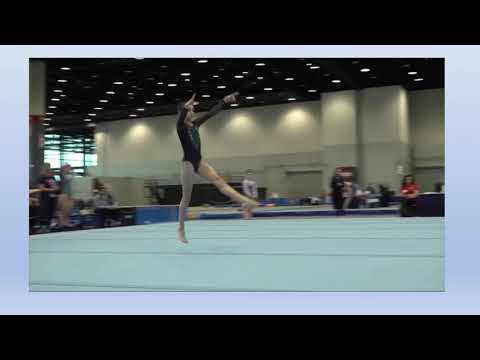
The following videos were selected by the Education Committee to help distinguish between the performance of Excellent, Good, and Basic execution of specific skills. Each judge may not necessarily see all these possible deductions, yet they are listed to improve judges' mastery of differentiating between the excellent, good, and basic skill examples. Skills shown as excellent are not necessarily the epitome of perfection, but rather serve as a current "mind's eye" representation of an execution goal. (When viewing the written frames in the videos, simply pause the video to read the comments.) As the director and committee receive more superior examples, the excellent may be replaced. We encourage all judges and coaches to submit any samples that they feel would qualify. Email . Refer to the Code of Points for specific deductions related to required technique.
Vault Skill Models
The essence of Vault is height, distance, and dynamics. The Vault examples have highlighted these characteristics and included body shape requirements for each vault, noting any deficits, and also evaluated landings and posture.
2.301 Handspring Front Tuck
2.304 Handspring Front Pike
4.305 Yurchenko Back Layout
4.306 Yurchenko Back Layout 1/1 Twist
4.406 Yurchenko Back Layout 1 1/2 Twists
4.506 Yurchenko Back Layout 2/1 Twists
Uneven Bars Skill Models
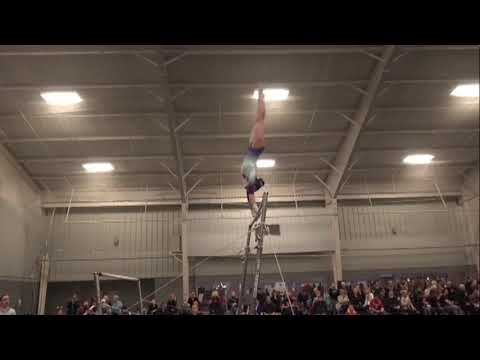
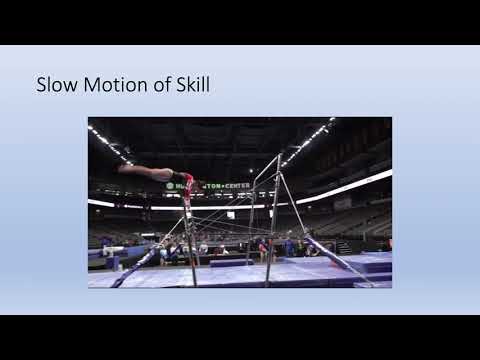
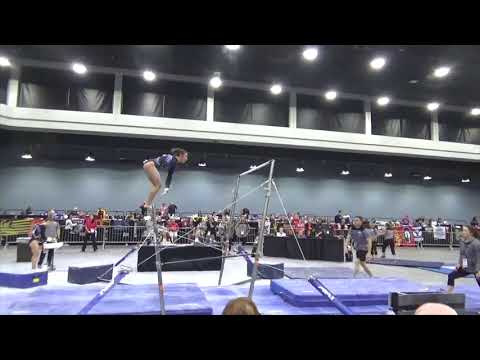
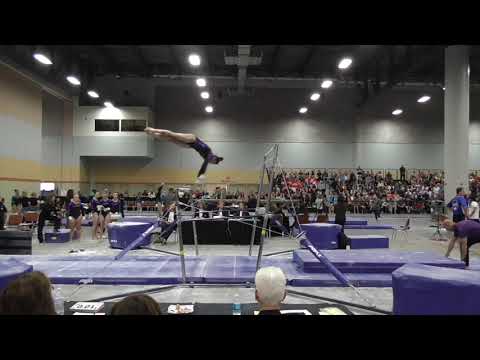
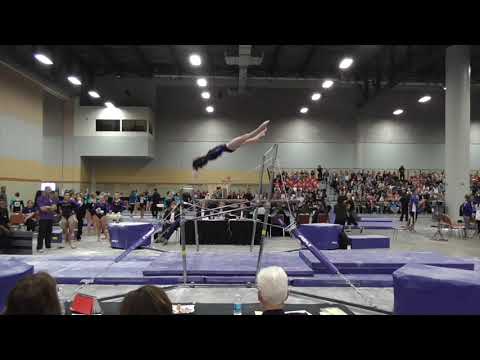
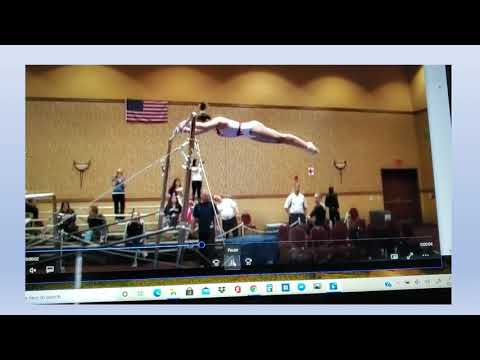
The major emphasis on the Uneven Bars Models Project will be to emphasize the most distinguishing characteristics and quality of the skill which separates an excellent performance from a good or basic performance. Comments on precision of Handstand positions and Insufficient Dynamics are to be used as "Throughout exercise". Most general execution, such as, flexed feet and knee bends, etc. are considered obvious and not noted.
1.101 Glide Kip
2.201 - Cast Handstand
2.301 Cast to Handstand 1/2 Turn
3.204 Clear Hip
3.304 Clear Hip to Handstand
4.202 Backward Giant
4.204 Overshoot
4.303 Backward Giant 1/2 Turn Blind Change
4.403 Backward Giant Full Turn
4.404 Overshoot to Handstand
4.405 Tkatchev
4.406 Pak
5.302 Front Giant
5.405 Jaeger
7.310 Hiccup "Toe Up"
3.401 Schaposchnikova
4.407 Geinger Piked
7.410 Maloney
7.501 Maloney w/ 1/2 Turn
7.511 Ray
Balance Beam Skill Models
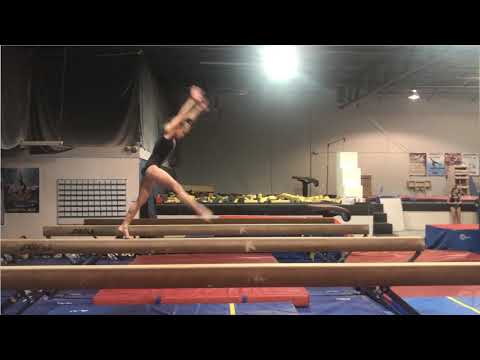
The major emphasis on the Balance Beam Models Project is to emphasize the most distinguishing characteristics and quality of the skill which separates an excellent performance from a good or basic performance. Amplitude, as well as meeting technical skill requirements has been emphasized.
2.101 Stag Split Leap
2.108 Beat Jump
2.301 Split Jump (cross) 1/2 Turn
2.305 Switch Leap
2.401 Split Jump 3/4 Turn
2.505 Switch Leap with 1/2 Turn
7.402 Front Aerial
7.403 Side Aerial
Floor Exercise Skill Models
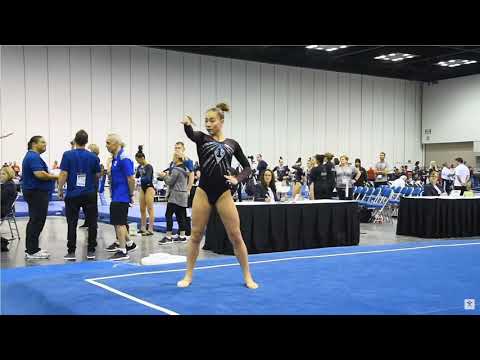
The major emphasis on the Floor Models Project is to emphasize the most distinguishing characteristics and quality of the skill which separates an excellent performance from a good or basic performance. Amplitude, as well as meeting technical skill requirements has been emphasized.
1.101 Split Leap
1.204 Switch Leap
1.304 Switch Leap 1/2 Turn
1.316 Wolf Jump with Full Turn
2.206, 2.306, 2.406 Wolf Turn Family
6.101 Front Salto Tuck
6.301 Salto Forward Stretched with 1/1 Twist
6.401 Salto Forward Stretched with 1 1/2 Twists
6.501 Salto Forward Stretched with 2/1 Twists
7.502 Arabian Double Salto
8.101 Back Salto Layout
8.201 Back Layout Salto Full Twist
8.403 Double Salto Backward Tucked
8.403 Double Salto Backward Piked
8.503 Double Salto Backward Tucked or Piked with 1/1 Twist